$5,000 Instagram bug: turning someone’s video note into a post
Instagram’s add-to-story request trusted the media ID it was given, so a mutual follower could turn your 24-hour video note into a post under your name. Fixed by Meta in 2024.
On this page
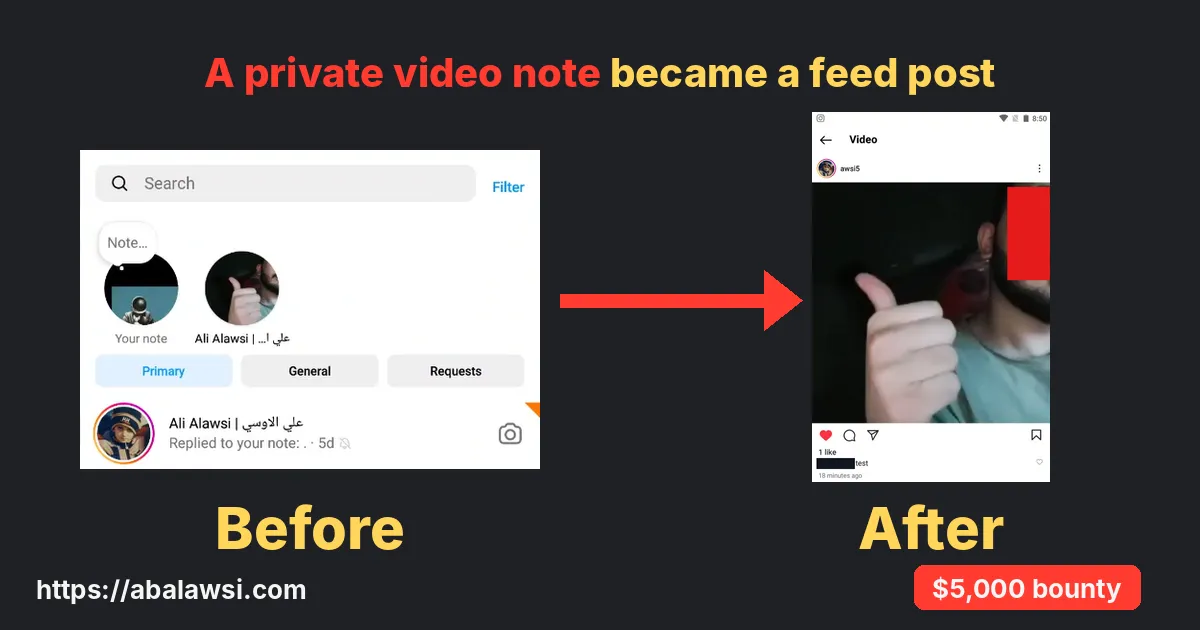
Instagram lets you add someone’s post to your story, and the story then links back to that post. I found that the request behind this button trusted whatever media ID the app sent, even when it was not a post. By swapping in the ID of a mutual follower’s video note, I turned their 24-hour note into a post under their name that people could like, comment on and forward. Meta fixed it in 2024 and awarded a $5,000 bounty.
What does Instagram promise?
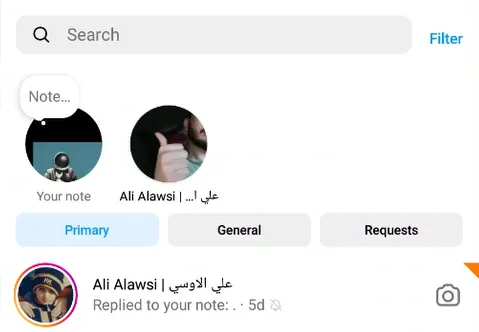
Some things you share on Instagram are made for a small audience and a short life. Two of them matter here:
- A note is a short message, text or video, that sits at the top of the Direct inbox of the people you follow back. It disappears on its own after 24 hours. The API response for a note carries both times, and they are exactly 86,400 seconds apart.
- A reply to a Questions sticker goes to the person who asked. As Instagram’s Questions sticker announcement explains, you find replies in your story’s viewers list.
Neither is a post. A post is something its owner chose to publish to their profile, where it can collect likes, comments and shares. The bug below let someone else make that choice for you.
How did a note become a post?
In plain words
When you share a post to your story, the app tells the server “put post number X in my story”. The server trusted that number. It never asked whether X was really a post, or whether you were allowed to share it. So I gave it the number of a friend’s video note instead. The server wrapped it in a story, and tapping it opened the note’s video as a full post on my friend’s account.
What happened
Two ordinary requests were enough. The attacker only needs to be a mutual follower of the victim, which is the normal audience of a note.
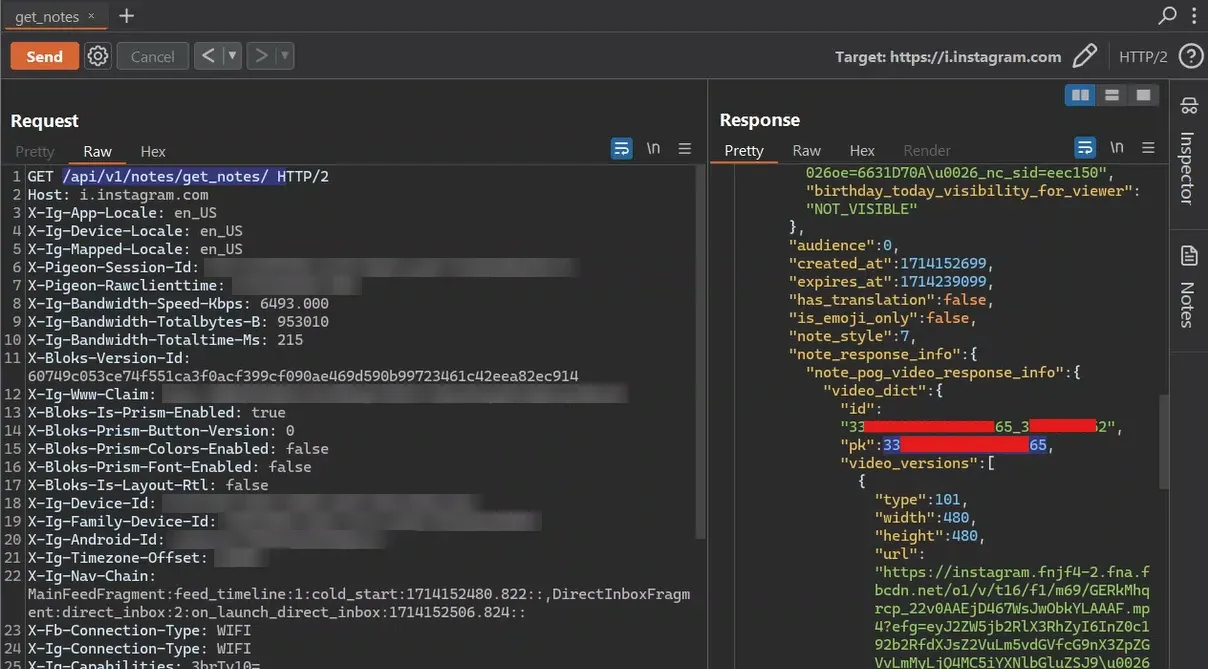
First, the attacker loads the notes they can see:
GET /api/v1/notes/get_notes/ HTTP/2
Host: i.instagram.com
For a video note, the response includes the media object behind the video. Its pk is the media ID:
{
  "audience": 0,
  "created_at": <SECONDS>,
  "expires_at": <SECONDS + 86400>,
  "note_style": 7,
  "note_response_info": {
    "note_pog_video_response_info": {
      "video_dict": {
        "id": "<MEDIA_PK>_<OWNER_ID>",
        "pk": <MEDIA_PK>,
        "video_versions": [ ... ]
      }
    }
  }
}
Second, the attacker opens any post, taps Add post to your story, and intercepts the request before it is sent. Two fields name the post being shared. I set both to the note’s media ID:
POST /api/v1/media/configure_to_story/ HTTP/2
Host: i.instagram.com

...
media_id=<VICTIM_MEDIA_PK>
reshared_media_id=<VICTIM_MEDIA_PK>
...
(Only the two fields I changed are shown.) The server accepted the request and published the story. Tapping View Post on it opened the note’s video as a post, shown under the victim’s account, with the usual like, comment and share buttons.
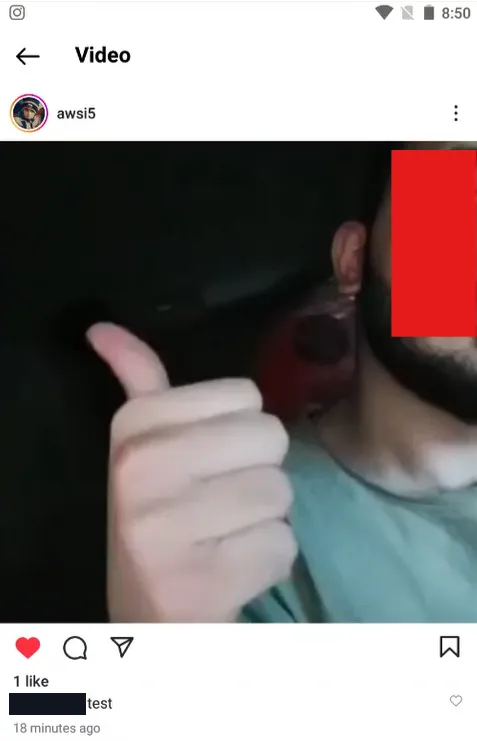
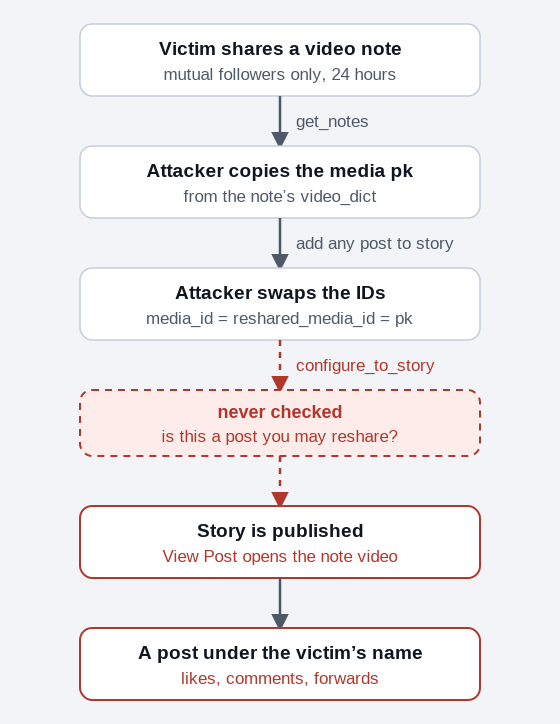
The victim did nothing beyond sharing a normal note, and never agreed to have it published as a post.
The same trick with a Questions sticker reply
I first found the bug with a Questions sticker. The steps are the same, but the media comes from a reply instead of a note:
- The attacker posts a story with a Questions sticker.
- The victim answers it with a photo.
- The attacker takes that photo’s media ID from their own app’s traffic, as the story owner.
- The attacker reshares any post to their story, with both ID fields set to the photo’s media ID.
- View Post opens the victim’s reply photo as a post under the victim’s name.
In this version, only two people could interact with the new post: the attacker, who owns the story, and the victim. The video note version reached further, which is why it is the main finding.
Reproduction
You need two Android accounts you own that follow each other, the Instagram app (I used version 326.0.0.42.90), and a proxy that can edit app traffic.
- On the victim account, share a video note.
- On the attacker account, call
get_notesand copy the note’spkfromvideo_dict. - Open any post, choose Add post to your story, and intercept
configure_to_story. - Set
media_idandreshared_media_idto the copiedpk, then forward the request. - Open the new story and tap View Post. The note’s video opens as a post on the victim’s account.
What was the impact?
Anyone who followed a person back could take that person’s video note and give it a second life as a post under their name. That breaks two things at once. Something the victim shared with a small audience, as a note meant to last 24 hours, became an ordinary post. Content the victim never published looked as if they had published it, and other people could like it, comment on it and forward it.
What did I confirm?
- A mutual follower could read the media ID of a video note through
get_notes. configure_to_storyaccepted that ID, and View Post opened the note video as a post on the victim’s account.- People who follow the victim and are followed back could watch it, like it, comment on it and forward it.
- The same request accepted the media ID of a photo sent as a Questions sticker reply. That post was open only to the story owner and the victim.
- Tested on Android app version 326.0.0.42.90, with test accounts I own only.
Why did it happen?
configure_to_story took the ID of the thing to reshare straight from the client and acted on it. It never checked what that ID pointed to. A reshare should only accept a post that the caller can see and that its owner allows to be shared. A note or a sticker reply is neither. This is Authorization Bypass Through User-Controlled Key: the server let a value the user controls decide which object it worked on.
The API also handed the media ID of every visible note to every viewer. On its own that was harmless. Combined with a reshare call that trusted any ID, it gave the attacker everything they needed.
It is the same root cause as another note bug I reported, where reusing a note’s media ID let me delete someone else’s video note. In both, the server accepted a media ID without asking who owned it and what kind of media it was.
How was it fixed?
Meta told me on 2024-09-04 that the issue was patched. The usual fix for this class of bug is to look up the object behind a client-supplied ID on the server, and to check its type, its owner and the caller’s rights before acting. For a reshare, that means accepting only feed posts that the caller can see and whose owner allows resharing.
What can developers learn?
- Never let a client-supplied ID choose an object without checking what it is. Check the type as well as the owner.
- Treat short-lived and small-audience content as its own class. Make sure no generic endpoint can turn it into lasting, wider content.
- When two fields describe the same object, as
media_idandreshared_media_iddo here, check both on the server. - Expose internal IDs only where the client needs them. Each one is a key someone will try in other endpoints.
FAQ
Who could have been affected?
Anyone who shared a video note could have had it turned into a post by someone they follow back. Anyone who answered a Questions sticker with a photo could have had that photo turned into a post by the person who asked.
What was the root cause?
The add-to-story request trusted the media ID sent by the app. It did not check whether the ID was a shareable post.
Timeline
- 2024-04-18: Reported the Questions sticker version with reproduction steps.
- 2024-04-19: Sent to the product team.
- 2024-04-21: Added the video note version, with wider reach.
- 2024-04-26: Sent two proof-of-concept videos for the video note version.
- 2024-05-08: Meta awarded a $5,000 bounty.
- 2024-09-04: Meta confirmed the issue was patched.
- 2026-10-29: Write-up published.